The Digital Witness
  • Home
  • About
  • Contact
  • Click to open the search input field Click to open the search input field Search
  • Menu Menu

Measuring Success

June 26, 2026

If you are reading this, you likely care about sharing the Gospel and seeing people come to know, trust and follow Jesus. However, it is easy to get caught up in measuring success by salvations alone and miss the valuable and hard work of preparing the soil through faithfully planting seeds of truth and hope.

The pressure to count conversions can subtly shift our focus from obedience to outcomes and from faithfulness to measurable results. But Scripture calls us to something different: excellence in our calling rather than obsession with personal success.

In order to appreciate our role, Paul reminds us in 1 Corinthians 3:6-7, “I planted the seed, Apollos watered it, but God has been making it grow. So neither the one who plants nor the one who waters is anything, but only God, who makes things grow.“

This truth liberates us from the burden of believing we must save anyone. We cannot. The Holy Spirit is the one who convicts hearts and draws people to salvation. Our responsibility is to faithfully share the Gospel and make disciples. We are called to plant seeds with excellence, water them with care, and trust God for the harvest in His timing.

Excellence in evangelism means preparing ourselves spiritually through prayer and deepening our understanding of Scripture. It means sharing the Gospel clearly, lovingly, and contextually, always ready to give an answer for the hope within us.

Excellence also includes investing in relationships, listening well, and demonstrating Christ’s love through our actions. It means following up with new believers, teaching them to observe all that Jesus commands, and equipping them to share their faith with others.

When we pursue excellence over success, we measure faithfulness instead of numbers. We celebrate obedience rather than outcomes we cannot control. We find joy in the privilege of participation rather than the pressure of performance.

This perspective brings tremendous freedom. We can share boldly without fear of failure because success is not ours to achieve. We can love people genuinely rather than viewing them as conversion statistics. We can rest in knowing that God is already at work, and we simply get to join Him in what He is doing.  When these things happen, people are more open to the message and feel more like they matter versus they are a project.

Let us keep striving for excellence in our calling, trusting the Holy Spirit to do what only He can do in transforming hearts and bringing people into His kingdom.


https://thedigitalwitness.com/wp-content/uploads/2026/06/NHG-FB-Mar-26.png 788 940 Pete Miller https://thedigitalwitness.com/wp-content/uploads/2023/11/The-Digital-Witness-2-300x59.png Pete Miller2026-06-26 19:22:032026-06-26 19:22:04Measuring Success

The Empty Basket

May 29, 2026

I recently read a story about a night shift worker who noticed a teenage boy wandering a supermarket with an empty basket, week after week, never buying anything. At first, he suspected trouble. But when he finally asked, the truth broke his heart. The boy was homeless. The sounds, smells and warmth of the store made him feel human again. For forty-five minutes while he wandered the store, he could pretend he belonged somewhere.

That empty basket became a lifeline. It tuned into a meal, some clothes, a friendship, a job, a college degree and ultimately a life changed. This story is a stark reminder of something we can too often miss in our digital age. People don’t always come to us seeking answers. Sometimes they just need to be seen.

Every day, thousands of people scroll through websites, forums, and online chats. They are not always hunting for answers, doctrine or debate.  They are simply searching for connection. They’re sitting alone at 2 a.m., feeling invisible, wondering if anyone cares they exist. Like that teenager in the store, they’re not looking to take something. They’re looking to find something. Warmth, hope or maybe for someone to notice them.

Jesus understood this deeply. When He encountered the woman at the well, He didn’t launch into theology. He asked for water. He saw her. He spoke to someone society had rendered invisible, and that simple act of recognition changed everything. Before she found any answers that day, she found value and worth.

We live in a world starving for genuine human connection. Behind every name, every anonymous question, every late-night search is a person carrying burdens we cannot see. Depression. Grief. Shame. Loneliness so deep it aches. They may click on a Christian website not because they’re ready to convert, but because somewhere in their darkness, they’re hoping someone might care.

Like Jesus, we are called to be people who really look and see others. Not to judge the “empty basket” or the seeming lack of commitment and understanding. Instead, we ask the only questions that matter: “Are you okay? How can I help?”

The key to transformative evangelism is presence before presentation.  It’s responding with grace when someone asks a question, they’ve been too afraid to voice elsewhere. It’s staying in the conversation when others have walked away. It’s recognizing that the person arguing against God might actually be crying out to Him.

The night shift worker didn’t convert that teenager with a sermon. He fed him. Saw him. Made him visible. And that simple act of compassion opened doors no lecture or argument ever could.

We have the same opportunity online. When someone reaches out angry, hurting, or simply curious, we can offer more than correct theology. We can offer the love of Christ in its most basic form. We remind them that Jesus loves them and offer assurance that they matter, that they’re seen, and that they’re not alone.

Because sometimes, that’s exactly what leads someone home.

https://thedigitalwitness.com/wp-content/uploads/2026/05/NHG-FB-Mar-26-1.png 788 940 Pete Miller https://thedigitalwitness.com/wp-content/uploads/2023/11/The-Digital-Witness-2-300x59.png Pete Miller2026-05-29 14:09:462026-05-29 14:09:47The Empty Basket

The Two Faces of Lostness

April 30, 2026

Anyone who’s spent time sharing Jesus knows the truth of not all lost people are lost in the same way. The difference isn’t about how far someone has wandered from God. It’s about whether they realize they’re wandering at all.

Consider the genuine seeker. This person is lost and uncertain of the answers. They have a heart that aches with unanswered questions. They lie awake at night wondering if there’s more to life than what they’ve experienced. They’re lost, yes, but they know it.

This person feels the emptiness and desires more. When you share Jesus with someone like this, it’s like offering cold water to someone dying of thirst. They may struggle with doubts and challenge certain aspects of faith, but underneath it all is an openness to consider that maybe, just maybe, Jesus is exactly who they’ve been searching for.

These conversations carry a special energy. There’s authenticity, vulnerability, real dialogue. The seeker isn’t pretending to have all the answers. Their humility creates fertile ground where the Holy Spirit can work and where seeds of truth can take root and grow.

Jesus was referencing these type of people when he said, “Blessed are the poor in spirit, for theirs is the kingdom of heaven” (Matthew 5:3). The kingdom belongs to those who have no righteousness of their own and are wholly dependent upon God’s grace.

But then there’s another kind of lost person. This person may be just as far from God, but they are lost and certain. They are wandering just as aimlessly, but they’re clutching their own map with absolute confidence. They’ve constructed their own philosophy, assembled their own version of truth, charted their own path to happiness and fulfillment. And that path doesn’t include Jesus.

Sharing the Gospel with them often feels like hitting a brick wall. It’s not that they can’t understand but it’s that they won’t. They’ve already decided they have the answers. Pride becomes an impenetrable fortress.

Every conversation circles back to their certainty, their wisdom, their enlightenment. Proverbs 26:12 captures this perfectly: “Do you see a person wise in their own eyes? There is more hope for a fool than for them.” The frustration you feel isn’t about losing a debate. It’s the profound heartbreak of watching someone reject the very lifeline they desperately need while insisting they’re perfectly fine.

We encourage you to remember who saves and that we can’t debate or argue someone into the kingdom. Pray for one kernel of truth to take root. Pray for their certainty to eventually fade.  Pray for them to encounter their own insufficiency.  Pray for them to recognize the emptiness their philosophy can’t fill.  Pray for their hearts to change.

As discouraging as those conversations might be, keep praying and loving those lost and certain. We must live authentic lives that point to Jesus. When life gets hard your words and example may be part of what turns them towards God.  We trust that God can break through the hardest hearts because He’s done it before, and He’ll do it again.

https://thedigitalwitness.com/wp-content/uploads/2026/04/DW-Image-4.26-e1777565489627.png 617 940 Pete Miller https://thedigitalwitness.com/wp-content/uploads/2023/11/The-Digital-Witness-2-300x59.png Pete Miller2026-04-30 16:08:512026-04-30 16:11:46The Two Faces of Lostness

Sharper than any double-edged sword

March 30, 2026

The Bible is the most sold, read, and quoted book in history. Its words have transformed lives, shaped civilizations, and brought countless people into relationship with Jesus Christ. Hebrews 4:12 tells us: “For the word of God is alive and active. Sharper than any double-edged sword, it penetrates even to dividing soul and spirit, joints and marrow; it judges the thoughts and attitudes of the heart.” 

While it is the most influential book in history, it is also the most misunderstood and the most misquoted. For many seeking truth online today, Scripture can appear contradictory, outdated, or irrelevant. As digital evangelists, we must understand this tension in order to effectively share the Gospel in our modern landscape.

The Barrier of Misconceptions

Before someone can encounter the living Christ, they often must first navigate a maze of misconceptions about who He is and what the Bible actually teaches. Many believe Christianity is about following rules rather than receiving grace. Others think faith requires abandoning reason or that the Bible condones oppression and hatred. These barriers, built from cultural misunderstandings and sometimes poor representations of Christ by His followers, can seem insurmountable.

In our digital spaces, where sound bites replace nuance and algorithms amplify division, these misconceptions spread faster than ever. A single misleading post can shape someone’s entire perception of Christianity. We cannot ignore this reality or dismiss these concerns as mere excuses. Instead, we must address them with the same grace Christ showed to sincere doubters throughout His ministry.

Meeting People Where They Are

Before we can speak truth into someone’s life, we must first learn their real concerns and language. When we pepper our messages with abbreviations like “Rom 8:28” or “Phil 4:13,” we inadvertently create another barrier. To someone unfamiliar with Scripture, these citations look like computer code or some type of cryptic, insider language that signals they don’t belong.

Instead, consider starting with accessible phrases like “God tells us” or “Jesus said” followed by the actual words of Scripture. Let the truth speak for itself before worrying about proper attribution. There’s time for teaching people to navigate their Bibles once they’ve encountered the power of God’s Word. Our initial goal is invitation, not intimidation.

This means resisting the assumption that everyone shares our biblical literacy. Many people exploring faith online have never attended church, never owned a Bible, and don’t know Matthew from Malachi. The first person I shared John 3:16 with asked who John was and if that was the page number in his Bible. Keep things simple and meet people exactly where they are just as Jesus did.

The Heart Behind the Message

Our approach becomes crucial here. Winning an argument about biblical accuracy means nothing if we lose the person in the process. Paul reminds us that without love, even the most eloquent proclamation of truth becomes “a resounding gong or a clanging cymbal.” Our witness must flow from genuine compassion, not from a desire to be right.

Patience is equally vital. Transformation rarely happens through answering one question or sending a single resource or sermon. More often, it unfolds through consistent, grace-filled conversations where people feel safe to ask hard questions.

When we approach evangelism with a heart that acknowledges the Bible’s power, while graciously addressing confusion and meeting misconceptions with patience , we create opportunities for the Holy Spirit to work in ways that make God’s Word clear.

https://thedigitalwitness.com/wp-content/uploads/2026/03/DW-Mar-26.png 788 940 Pete Miller https://thedigitalwitness.com/wp-content/uploads/2023/11/The-Digital-Witness-2-300x59.png Pete Miller2026-03-30 14:15:072026-03-30 14:15:07Sharper than any double-edged sword

Embracing Doubt

February 27, 2026

No one is immune from doubt. We all experience questions, uncertainties and doubts. Doubt is part of human nature. People, circumstances, and hard seasons have a way of shaking what we thought we knew about ourselves and what we believe. So, when that same doubt finds its way into our faith, it shouldn’t surprise us. It’s not a sign that something is wrong with us but rather a sign that we’re human.

Throughout Scripture, God’s people asked hard questions, and He never turned away. He welcomes our doubts, meets us in our uncertainty, and invites our honest seeking. We don’t see Jesus reject Thomas but instead actually invite him to come closer and meet his doubt.

Our questions don’t diminish God’s love for us. His love remains unchanging no matter where we are in our journey. He invites us to ask and have honest dialogue.  He meets us gently in our doubt and continues to show us mercy.

Unfortunately, too often Christians pull away from doubters because their questions create discomfort. It’s easier to surround ourselves with the already convinced than to sit with someone in the tension of unanswered prayers, intellectual struggles, or spiritual darkness.

But that approach to evangelism has it backwards. Walking alongside someone with doubt as they work through their questions and problems isn’t a weakness in our witness. It is the very heart of it. Jude 1:22 calls us to have mercy on those who doubt.

When we engage doubters online, we’re not called to be answer robots dispensing theological certainties. We’re called to be present and share the ultimate hope found in Jesus. Don’t let someone’s uncertainty becomes the grounds for a debate or a vulnerable confession be the trigger to offer quick fixes and correction. We need to treat doubt not like a virus to be eradicated but rather a soul taking faith seriously enough to wrestle with it.

We must welcome all questions and encourage those with doubt to ask questions and be curious. We must seek out and embrace those who questions to love and encourage them more than try to “fix” them. The goal isn’t to turn doubt into sweet belief through clever arguments or emotional manipulation. It’s to walk alongside, to listen deeply, to love without agenda.

Online ministry is an opportunity to model something countercultural. Instead of raising voices and winning arguments, we display the courage to sit with questions. To acknowledge when we don’t have an easy answer and admit our own times of doubt. Finding out why someone has the questions they do often is the door to sharing what the Bible actually says about what they are experiencing.

Apologetics are important and have a place in evangelism. But what many people struggling with faith need is someone simply willing to embrace their doubt and meet them in those questions with the same grace and mercy God shows us.

Isolation was never God’s design for those who question. A person dealing with doubt should never have to walk alone. Digital evangelism at its best creates safe places and communities where questions are invitations to deeper exploration and shared stories of transformation.

https://thedigitalwitness.com/wp-content/uploads/2026/02/DW-Feb-26.png 788 940 Pete Miller https://thedigitalwitness.com/wp-content/uploads/2023/11/The-Digital-Witness-2-300x59.png Pete Miller2026-02-27 16:04:182026-02-27 16:04:19Embracing Doubt

The Gift of Presence

January 29, 2026

In our over connected and distracted world there is a lack of genuine personal connections. This often means the most generous thing we can offer another person is our full attention. Not a glance at our phone between their sentences. Not half-listening while assuming we know what they need and then mentally rehearsing our response. Full attention as in being present in body, mind, and spirit for genuine connection.

This kind of attention mirrors the heart of Jesus himself. Throughout the Gospels, we see Christ stopping for individuals when crowds pressed in around Him. He noticed the woman who touched His garment in a sea of people. He looked up at Zacchaeus hidden in a tree. He engaged the Samaritan woman at the well in the heat of the day when others would have hurried past. Each encounter reveals a Savior who really saw people and gave them the gift of His undivided presence.

While the most generous thing may be our attention, the most precious thing we can share is Jesus Christ. When we truly listen to someone, we create space for the Holy Spirit to work. We become His hands and feet, offering the ministry of presence that Christ modeled so perfectly. As Proverbs 18:13 reminds us, “To answer before listening—that is folly and shame.” Deep listening is an act of humility and love.

Consider each conversation as an incredible opportunity and divine appointment. The people that visit the ministry who seems chatty might be lonely. The young person coming to us might be desperate to be heard. The elderly person who comes often or repeats stories might simply need someone to talk to in order to feel valued. When we approach these moments with intentionality, we partner with God in His work of redemption and restoration.

James 1:19 instructs us to “be quick to listen, slow to speak and slow to become angry.” This wisdom transforms relationships. When we resist the urge to interrupt, fix, or redirect, we communicate something profound: You matter. Your story matters. You are worth my time.

In a culture that commodifies attention and fragments focus, choosing to be fully present is radical and countercultural. Our best relationships are usually because we care about one another leading us to value what the other has to say. This simple approach lays the groundwork for the Gospel to land on fertile soil.

Today, look for your divine appointments. See each conversation not as an interruption but as an invitation to reflect Christ’s love through the simple, powerful gift of your complete attention. In these moments, we don’t just share information; we share ourselves. And ultimately, that lets us share Him more effectively.

https://thedigitalwitness.com/wp-content/uploads/2026/01/NHG-FB-Feb-26.png 788 940 Pete Miller https://thedigitalwitness.com/wp-content/uploads/2023/11/The-Digital-Witness-2-300x59.png Pete Miller2026-01-29 13:20:452026-01-29 13:20:46The Gift of Presence

A Fundamental Shift in Apologetics

December 30, 2025

The general landscape of evangelism has shifted dramatically. For much of the last century, skeptics approached Christianity primarily through the lens of truth. They asked questions like: Is the Bible God’s Word? Have the Scriptures been corrupted? Why is Christianity the correct religion among all world religions? These questions sought intellectual answers about Christianity’s validity.

Today, something fundamental has changed. While truthfulness still matters, many nonbelievers now lead with a critical theory tone to their questions. Now the conversation may be more structured as a debate and start with a question like: Is Christianity even good?

In our digital age, skeptics arrive armed with historical critiques and moral objections. They may ask things like:

  • Why should I believe in Christianity if it supported slavery?
  • How can I follow a faith that has oppressed women?
  • What about the Crusades, colonialism, or religious violence?  

These are personal, moral accusations that demand we address Christianity’s real-world impact. This shift reflects our cultural moment. Critical theory and social media amplify stories of religious hypocrisy and historical injustices. People that have been hurt by the church reinforce narratives about Christianity’s harm.

The rise of “culture shaming” has further complicated evangelism. Christianity is increasingly portrayed not just as wrong, but as backwards, oppressive, and embarrassing. Believers are painted as intolerant or ignorant simply for holding biblical convictions. This creates a chilling effect where Christians hesitate to share their faith for fear of public ridicule or being labeled hateful.

The digital age magnifies this pressure where one viral post can turn a sincere attempt at sharing the Gospel into a social media firestorm. Yet we must remember that Jesus promised His followers would face opposition. The challenge isn’t to retreat into silence, but to speak truth with such genuine love and wisdom that our lives become the most compelling apologetic.

Engaging these evolving questions with both honesty and grace means we should keep certain things in mind:

Acknowledge the pain. Don’t dismiss historical wrongs or rush to defend everything done in Christianity’s name. We are only getting one side of the story, but this person is the only one we can share hope within this conversation. When believers have misused Scripture to justify evil, we must say so clearly.

Distinguish Jesus from His followers. Help skeptics see the difference between Christ’s teachings and Christians’ failures. Jesus confronted religious oppression, elevated women, and commanded love even of our enemies. Brokenness done in the name of something good is simply misguided.

Be honest about the full story. There are parts of the bible that are hard to understand. They become clearer when we learn their historical context and consider them within God’s complete story. It’s also worth noting that Christian faith has sparked powerful movements for abolition, human rights, education, healthcare, and justice throughout history. Taking time to understand context matters deeply.

Live authentically. Sometimes your presence and willingness to listen preaches louder than your words. Skeptics aren’t looking for perfect Christians. They are looking for honest ones. When we live authentically as followers of Jesus, acknowledging our struggles while demonstrating real transformation, we give credibility to the message we proclaim. When our lives reflect genuine love, humility, forgiveness, and integrity then others see evidence that Jesus is real and His message is worth considering. Our transformed lives become the most compelling apologetic we can offer.

The Gospel remains powerful for every generation. By understanding how today’s seekers approach faith, we can meet them where they are with honest conversations that point to Jesus. Jesus is the truth and hope that ultimately changes hearts. The mission hasn’t changed but we must be prepared as the objections to our faith evolve.

https://thedigitalwitness.com/wp-content/uploads/2025/12/DW-12-25.png 788 940 Pete Miller https://thedigitalwitness.com/wp-content/uploads/2023/11/The-Digital-Witness-2-300x59.png Pete Miller2025-12-30 15:09:022025-12-30 15:09:03A Fundamental Shift in Apologetics

Meeting Hurting Hearts in the Shadows of the Holidays

November 24, 2025

The holiday season paints our social media feeds with warm gatherings and joyful celebrations. But for every photo of a perfect family dinner, there’s someone scrolling alone, carrying wounds that the holidays only deepen.

As gracious believers, we have a unique opportunity to reach people in their quiet moments of pain. That single mother dreading questions about her absent ex-husband. The adult child estranged from toxic parents. The grieving heart facing their first Christmas without someone they loved. These aren’t hypothetical scenarios but are real people with hard stories and very heavy hearts.

Jesus consistently sought out those on the margins while others celebrated. He understood that pain doesn’t take holidays off and can actually be heightened by what someone may be missing. Our presence and online interactions during this season should reflect that same compassionate awareness.

Think about the most practical ways you can meet someone in the shadows and minister to them. It may start by simply acknowledging that holidays aren’t happy for everyone. A simple comment validating this reality can be profoundly comforting to someone who feels invisible in their struggle. Share that it’s okay not to be okay, even during “the most wonderful time of the year.”

Look to create safe spaces for honest conversation.  Whether that is online or in person, we need to let others know their story matters, and they are welcome to share it if they desire. Ask open-ended questions that give permission for vulnerability such as “How are you really doing this season?”

Watch for comments that hint at isolation or pain and respond with genuine care.  Bible truth is always powerful but sometimes authentic human connection is what ministers most. Let your presence and genuine concern be what points to Christ’s love.

You can also share your own story if you’ve walked through difficult holidays. The enemy wants to isolate and make those hurting feel alone. Similar and authentic experiences dismantle the facade that Christians have perfect lives and makes the gospel more accessible to hurting people.

Remember that for someone in deep emotional pain, their online conversation might be their only human contact that day. Your attitude, message, and willingness to simply listen could be the thread keeping them connected to hope.

The Light of the World came for broken people in dark places. This season, let your presence shine brightest not where everyone’s celebrating, but where someone’s barely surviving. That’s where evangelism becomes transformational. When God’s love takes on flesh through you to meet someone in their loneliest moment with the one true source of hope.

https://thedigitalwitness.com/wp-content/uploads/2025/11/NHG-FB-Dec-25.png 788 940 Pete Miller https://thedigitalwitness.com/wp-content/uploads/2023/11/The-Digital-Witness-2-300x59.png Pete Miller2025-11-24 17:09:392025-11-24 17:09:39Meeting Hurting Hearts in the Shadows of the Holidays

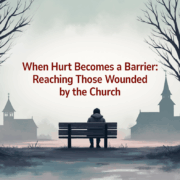
When Hurt Becomes a Barrier: Reaching Those Wounded by the Church

October 30, 2025

Effective evangelism requires more than simply sharing the Gospel. It demands recognizing that every person we speak with brings a unique story. While some genuinely wrestle with Christianity’s truth claims, others aren’t seeking theological clarity at all. They simply need someone to hear why they have walked away from their faith.

For these former believers, the reasons rarely involve apologetics or science. Instead, they carry wounds inflicted by Christians themselves.  These scars are deeply personal and derive from harsh judgment, hypocrisy, spiritual abuse, or the quiet ache of feeling invisible in communities that preached unconditional love. These aren’t abstract objections but rather deeply personal hurts that shape how they see Jesus, the church, and whether faith could ever feel safe again.

This reality reminds us that it is profoundly difficult to separate personalities from doctrines. Some people don’t remain committed to convictions when others holding the same beliefs behave badly. When someone has been genuinely hurt by the church, our carefully prepared arguments and apologetics often fall flat. Logic cannot heal a broken heart.

Here are some simple ways to connect with those hurting and broken from experiences with those who claim to be Christian.

Start with Listening, Not Defending   –  When someone shares their painful story, resist the urge to explain, justify, or defend the faith immediately. Their hurt is real, even if their theology became confused in the process. Create space for them to be heard without judgment. Sometimes the most evangelistic thing we can do is simply validate someone’s pain, share how sorry we are and how Jesus hurts with them.

Acknowledge the Church’s Failures  –  We don’t need to defend every Christian who’s ever behaved poorly. Jesus himself reserved his harshest words for religious leaders who burdened others. It’s okay to say, “That shouldn’t have happened to you. I’m sorry you experienced that in a place that should have shown you love.” Churches are made up of broken believers and sometimes they do terrible things to one another. That does not change God’s love for us.

Embody the Difference  –  The most powerful apologetic for a watching world is Christians who actually look like Jesus. Be gracious and humble showing patience and genuine love. Your consistent, authentic faith over time can begin to separate the beauty of Christ from the ugliness that was experienced. These people are not looking for perfect Christians just honest ones that appreciate their perspective. When we live authentically as followers of Jesus, we give more credibility to the message we proclaim.

Point Beyond Ourselves  –  Our goal is always to share the love and grace that Jesus offers.  We should gently remind them that Christianity isn’t about following imperfect people but is about trusting a perfect Savior. A Savior who can also relate to being wounded by people claiming religious authority. Jesus understands betrayal, abandonment, and hypocrisy because he suffered all these things himself.

These are not easy conversations. Don’t expect everything to be forgotten or become ok through one conversation. We must meet these doubters where they hurt. We must show patience, humility, and a willingness to let our care for their souls be louder than our arguments. Our transformed lives become the most compelling reason for others to reconsider faith. We need to be the living demonstration that following Jesus changes everything. Remember that sometimes the path back to faith must first wind through seasons of healing and grace.

https://thedigitalwitness.com/wp-content/uploads/2025/10/DW-10.25.png 788 940 Pete Miller https://thedigitalwitness.com/wp-content/uploads/2023/11/The-Digital-Witness-2-300x59.png Pete Miller2025-10-30 16:50:252025-10-30 16:50:26When Hurt Becomes a Barrier: Reaching Those Wounded by the Church

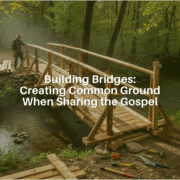
Building Bridges: Creating Common Ground When Sharing the Gospel

September 30, 2025

When sharing the Gospel across cultural, geographical and personal divides, our greatest challenge is to create genuine human connection and understanding. This is more than just meeting people “where they are”. We must find the shared experiences that lead to meaningful dialogue and mutual understanding despite different worldviews and experiences.

The Power and Peril of Faith Metaphors

The Gospel message is rich with metaphors that make spiritual truths tangible. We speak of being “born again,” finding the “narrow path,” or “walking by faith”. These images carry profound meaning for believers, yet they can become barriers when sharing faith across diverse backgrounds.

Consider how differently “shepherding” might land. For someone from a rural background, it evokes gentle guidance and protection. For someone from an urban environment, it might seem outdated or condescending. Military metaphors like spiritual “warfare” or “fighting the good fight” might energize some while alienating others who’ve experienced actual conflict or been displaced.

Finding Universal Bridges

The most effective Gospel conversations draw from experiences that transcend cultural boundaries.  Universal human experiences such as love, loss, hope, forgiveness, and the search for purpose resonate across all cultures. When Jesus spoke of a father welcoming home a wayward son, he tapped into family dynamics that translate across time and geography.

Natural phenomena such as light overcoming darkness, seeds growing into fruitful plants, or rivers bringing life to dry ground speak to experiences virtually everyone can access. Basic relational experiences like parent and child bonds, friendship, and reconciliation after conflict can provide common ground for understanding God’s heart toward humanity.

Moving Beyond Assumption to Understanding

Effective Gospel communication requires moving from assumption to curiosity. Instead of launching into familiar metaphors, begin by listening to how others describe their experiences of meaning, struggle, and hope. Their language provides clues about the bridges that will resonate with them.

This approach doesn’t compromise the Gospel’s truth but seeks the clearest way to communicate it. When Paul addressed the Athenians, he found connection points in their own culture while maintaining his message.

Practical Steps

There are some simple things you can do to make conversations more connective.

  • Listen first: Let conversations reveal what resonates with your listener.
  • Ask clarifying questions: “When I mention forgiveness, what comes to mind?” This opens dialogue rather than assuming comprehension.
  • Use qualifying language: Instead of “This is exactly like…” try “One way to think about this might be…” This creates space for exploration.
  • Share stories, not just concepts: Personal testimonies work across cultures because they invite listeners into experiences rather than demanding intellectual agreement.

Creating Common Space

The goal isn’t perfect communication but authentic connection. When we prioritize understanding over being understood, we create space where the Gospel can take root naturally. This doesn’t mean compromising truth but presenting it in ways that invite rather than exclude.

The Gospel itself is the ultimate bridge between God and humanity. Our conversations should reflect that same heart of connection and reconciliation, creating common ground where hearts can meet and understanding can flourish. Planting in soft soil always gives the seeds of truth more chance to take root.

https://thedigitalwitness.com/wp-content/uploads/2025/09/NHG-FB-Oct-Nov-25.png 788 940 Pete Miller https://thedigitalwitness.com/wp-content/uploads/2023/11/The-Digital-Witness-2-300x59.png Pete Miller2025-09-30 17:09:352025-09-30 17:09:36Building Bridges: Creating Common Ground When Sharing the Gospel
Page 1 of 6123›»

Archive

  • June 2026
  • May 2026
  • April 2026
  • March 2026
  • February 2026
  • January 2026
  • December 2025
  • November 2025
  • October 2025
  • September 2025
  • August 2025
  • July 2025
  • June 2025
  • May 2025
  • April 2025
  • March 2025
  • February 2025
  • January 2025
  • December 2024
  • November 2024
  • October 2024
  • September 2024
  • August 2024
  • July 2024
  • June 2024
  • May 2024
  • April 2024
  • March 2024
  • February 2024
  • January 2024
  • December 2023
  • November 2023
  • October 2023
  • September 2023
  • August 2023
  • July 2023
  • June 2023
  • May 2023
  • April 2023
  • March 2023
  • February 2023
  • January 2023
  • November 2022
  • October 2022
  • September 2022
  • August 2022
  • July 2022
  • June 2022
  • May 2022
  • April 2022
  • March 2022
  • February 2022
  • January 2022
  • December 2021

© Copyright 2024

Scroll to top Scroll to top Scroll to top